Skip to content



Lifting 101: A Guide to Perfect Technique Without a Coach
GYMSPORTZ PTE LTD | 23 June 2026

Picking up a barbell for the first time can feel like a peculiar mix of confidence and confusion. You know roughly what you are meant to do, but knowing whether you are doing it well is another question altogether. Most people who start lifting without a coach end up copying whoever happens to be on the next rack, hoping the movement looks roughly right and crossing their fingers that nothing pulls or twinges.
The good news is that solid technique does not require a personal trainer hovering over your shoulder. With a little patience, some honest self-assessment, and a handful of good habits, you can build a lifting foundation that keeps you safe and actually gets you stronger. This guide runs through the basics that make the biggest difference, from how you set up before a lift to the small adjustments that turn a shaky rep into a confident one.
Set Up Before You Load the Bar
Many beginners load the weight first and think about form afterwards. Try flipping that order. Before you step under a loaded rack, take a few seconds to check your feet, your grip, and your breathing.
Your stance should feel stable rather than stretched. Feet roughly hip-width apart, weight spread evenly across the whole foot rather than balanced on your toes. Your grip should be firm but not strangled, since white knuckles usually mean tension creeping into your wrists and shoulders that has no business being there.
Breathing is the part most people skip entirely. A simple rule works for almost every lift: breathe in before you lower or lift the weight, brace your core gently, then breathe out as you push through the hardest part of the movement. This single habit alone fixes a surprising number of form issues, because a braced torso keeps your spine supported and stops your back from rounding under load.
Choosing Equipment Does Not Need to Be Complicated
New lifters often overthink which bar to use before they have even nailed their stance. A fixed-weight barbell, the type already loaded to a set weight rather than one you load yourself with plates, is a sensible place to start because it removes one decision from an already busy first session. You simply pick a weight that challenges you without breaking your form, lift it, and move on. Once your technique feels settled, you can graduate to a standard Olympic bar and build up your own loading from there.
Learn the Few Movements That Cover Almost Everything
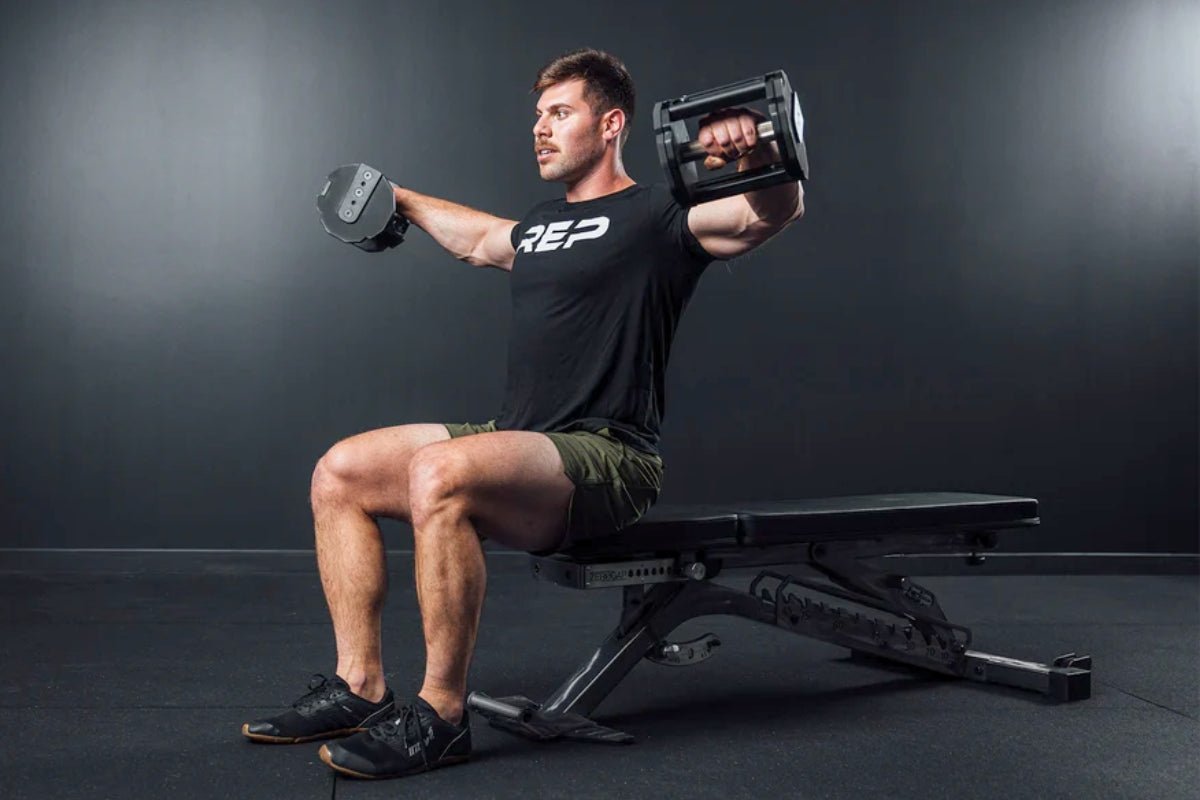
You do not need a long list of exercises to build a sensible programme. Four movement patterns cover most of what a beginner needs: a squat, a hip hinge such as a deadlift, a push such as a bench or overhead press, and a pull such as a row. The overhead press, a regular feature in shoulder workouts, follows the same setup principles as every other lift here, so the habits below apply just as much.
Practise each pattern with light-weight until it feels natural in your body. Watching yourself in a mirror helps, but recording a short video on your phone helps even more, because a mirror only shows one angle and your brain is busy counting reps rather than analysing your form in real time.
A few checkpoints to film and review for each lift:
● Does your back stay neutral throughout, or does it round at the bottom of the movement?
● Do your knees track in line with your toes during a squat, rather than caving inward?
● Does the bar travel in a straight, controlled path, rather than swinging or drifting?
● Are your shoulders staying down and back rather than creeping up towards your ears?
Warm-Up Properly, Then Progress Slowly
A proper warm-up does not need to take long, but skipping it tends to catch up with you eventually. Five to ten minutes of light cardio followed by a couple of lighter sets is usually enough to wake up the muscles you are about to use and rehearse the movement pattern before it counts.
Progression should be gradual rather than dramatic. Adding a small amount of weight each week, or simply adding an extra rep or two, keeps your joints and connective tissue catching up with muscles that tend to get stronger faster than tendons and ligaments do.
Common Mistakes to Fix Early
A handful of habits show up again and again among self-taught lifters.

None of these habits are unusual, and most lifters fall into one or two of them at some point. Spotting the pattern early saves you from months of reinforcing something that becomes harder to unlearn the longer it sticks around.
Listen to Your Body, Not Just the Mirror
Technique is not only about how a lift looks. How it feels tells you just as much. Sharp pain, pinching, or a joint that feels unstable are signals to stop and reassess rather than push through. Mild muscle fatigue is normal. Joint pain generally is not.
Keeping a simple log of what you lifted and how it felt gives you something concrete to look back on, rather than relying on memory, which has a habit of being kind to itself when it comes to recalling how heavy last week's session actually felt.
Building Confidence Over Time
Learning to lift without a coach takes longer than having someone correct you on the spot, but it builds a kind of body awareness that sticks with you. Every session spent checking your stance, filming your form, and adjusting small details adds up to a lifter who understands their own movement rather than someone simply following instructions.
If you are setting up a home gym or want equipment that supports good technique from the very first rep, Gymsportz offers a wide range of gym equipment and services to help you train safely and confidently. Visit Gymsportz to see how we can help you build the right setup for your lifting journey.