Skip to content



Dumbbell Shoulder Press: Proper Form, Mistakes to Avoid, & Variations
GYMSPORTZ PTE LTD | 20 Aug 2026

Strong shoulders make almost everything else in the gym easier, from carrying groceries up the stairs to locking out a solid overhead lift. The dumbbell shoulder press is one of the most reliable ways to build that strength, and once you get the form right, it becomes a staple you'll keep coming back to for years.
Plenty of people avoid this move because they've seen it done badly, with elbows flaring out, backs arching, and dumbbells wobbling all over the place. The good news is that with a few small adjustments, you can turn this into one of the safest and most effective shoulder exercises with dumbbells in your routine. Let's break down how to do it properly, what to watch out for, and a few variations to try once you've nailed the basics.
Why the Dumbbell Shoulder Press Deserves a Spot in Your Routine
Unlike a barbell press, dumbbells let each arm move independently, which means your smaller stabiliser muscles have to work harder to keep everything balanced. This helps even out any strength imbalances between your left and right sides, something a barbell can sometimes mask. It also gives you a fuller range of motion, since your arms aren't locked into a fixed bar path.
If you're building your shoulders as part of a push day, or slotting it into one of your usual workout splits, this exercise targets the deltoids while also engaging your triceps and upper chest. Over time, it contributes to better posture, more stable shoulder joints, and a stronger overhead position for other lifts.
It's also a fairly accessible exercise for people at different stages of their training. Beginners can start with light dumbbells to get comfortable with the pressing pattern, while more advanced lifters can load up and use it as a genuine strength builder. There's no need for a rack or a spotter either, which makes it an easy addition to a home gym setup.
Getting the Form Right
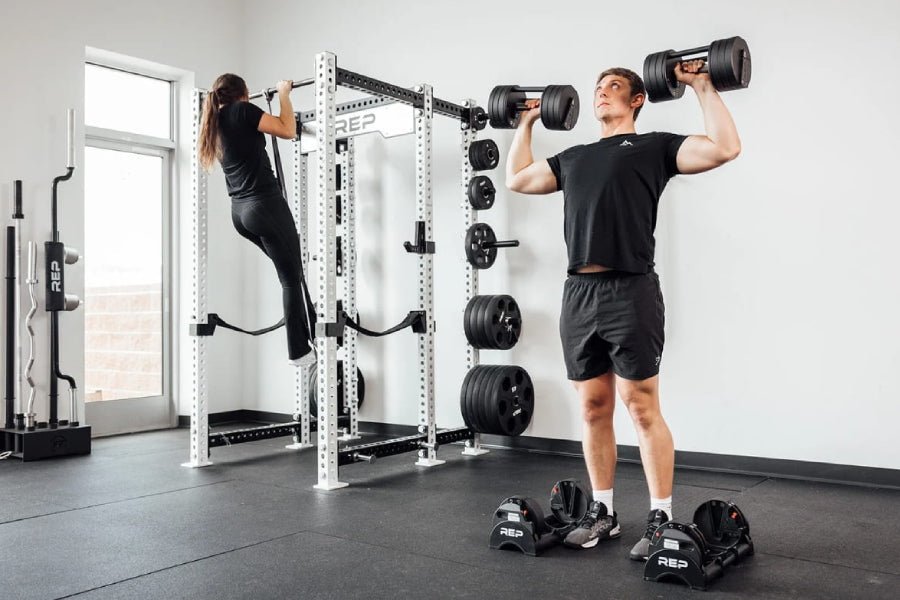
Good form starts before you even lift the dumbbells. Sit on a bench with back support, or stand with your feet shoulder-width apart if you're doing a standing version. Either way, your core should stay braced throughout the movement, and your ribs should stay tucked down rather than flaring upward as you press.
Here's a simple breakdown of the movement:
● Hold a dumbbell in each hand at shoulder height, palms facing forward
● Keep your elbows slightly in front of your body, not flared out to the sides
● Press the dumbbells upward until your arms are fully extended, without locking your elbows aggressively
● Lower the weights slowly and with control back to shoulder height
● Keep your wrists straight and stacked over your elbows throughout
Breathing is easy to overlook here, but it makes a real difference. Exhale as you press up, inhale as you lower the dumbbells back down. This keeps your core engaged and stops you from holding your breath, which can spike your blood pressure and throw off your balance mid-set.
Common Mistakes That Sneak Into Everyone's Form
Even experienced lifters fall into bad habits with this exercise, usually because the weight creeps up faster than the technique can keep up with.
One of the most frequent errors is arching the lower back to help push the dumbbells overhead. This usually happens when the weight is too heavy for a controlled press, and the body compensates by using momentum from the spine instead of the shoulders. If you notice your lower back lifting off the bench or your hips pushing forward while standing, it's a sign to drop the weight and reset.
Flaring the elbows out to the sides is another common issue. It might feel more natural, but it puts unnecessary strain on the shoulder joint and reduces how effectively your deltoids are doing the work. Keeping the elbows tracking slightly forward, roughly in line with your wrists, keeps the tension where it belongs.
Rushing through the lowering phase is also a mistake to correct early. Many lifters focus so much on the press that they let the dumbbells drop quickly on the way down. Slowing this part of the movement down builds more strength and control, and it reduces the risk of shoulder strain.
Finally, watch your starting position. Bringing the dumbbells too low, below the level of your shoulders, forces your rotator cuffs into an awkward angle at the bottom of the movement. Starting from a slightly higher position protects the joint and keeps the exercise focused on the right muscles.
Using mismatched weights or letting one arm dominate the press is another habit to keep an eye on. It often happens without you noticing, especially if one shoulder is naturally a little stronger. Pausing occasionally to check that both dumbbells are moving at the same pace and reaching the same height helps keep your training balanced on both sides.
Variations to Try Once You're Comfortable
Once the standard version feels solid, a few variations can help keep your shoulders challenged in new ways.
The seated Arnold press adds a rotational twist, starting with palms facing you and turning outward as you press up. This brings the front deltoids into play a little more and adds variety if you've been doing straight presses for a while.
The single-arm dumbbell press is another useful option, particularly if you're working on correcting an imbalance between sides. Pressing one arm at a time also forces your core to work harder to resist rotating, which adds a stability challenge on top of the shoulder work.
For those without access to a bench, the standing dumbbell press is a solid alternative that brings your legs and core into the movement as stabilisers. Just be mindful that standing versions usually mean lighter weights, since you lose the back support a bench provides.
If you're looking to build more control and reduce momentum entirely, try a tempo press, where you count to three on the way up and three on the way down. It feels far harder than it sounds, and it's a great way to expose any weak points in your current form.
Bringing It All Together
The dumbbell shoulder press rewards patience. Getting the technique right first, before chasing heavier weights, sets you up for steady, sustainable progress rather than a string of frustrating plateaus or nagging niggles. Start light, focus on control, and let the small adjustments do their job.
If you're looking to build out your home gym setup with quality dumbbells and equipment that make it easier to train properly, check out Gymsportz. Our range is a great starting point for anyone serious about getting their shoulder training right from home.